
First in a three-part series exploring how AI role-play could transform education
I don’t know how school was for you.
For me, life didn’t really begin until after university.
After school, I felt top heavy, my head full of information and my body out of place in the real world. I knew how to write essays, pass exams, and play the academic game. I lacked practical know-how or survival instincts.
Instead of stepping neatly onto the first rung of a career ladder, I moved to Spain. That choice was personal and unconventional, but over time I realised something else was shifting too.
Later, when I started my own businesses, I learned more in a few chaotic summers in hospitality than I ever did in Business Studies A-level. Marketing. Leadership. People skills. Making decisions on the fly. Handling pressure when things go wrong.
Everyone’s path is different. But increasingly, employers are looking for capability and credibility, not just qualifications. Experience, not exposure. Judgement (nous) not recall.
And I can’t help thinking the education system could do more to prepare students. Not just for the world as it was, but for the world that is to come.
Educators are not standing still. Many schools are actively strengthening oracy, collaboration, and deeper thinking. Core subjects like language and science are being taught with more care, more awareness than in the past.
The tension isn’t about ambition or effort. It’s structural.
On one side, schools rely on quantitative exercises that are quick to assign, easy to grade, and defensible under auditing frameworks. On the other, there is written work designed to encourage reasoning and expression, but which demands significant teacher time to read, assess, and respond to properly.
Both approaches exist for good reasons. Both affect workload and are prescribed by governing bodies.
Some forward-thinking schools are beginning to experiment with AI-assisted evaluation to ease this burden. In Europe, however, regulatory and ethical considerations rightly slow widespread adoption.
The question remains are students assessed so they can benefit from the feedback OR so the school can monitor progress and the educational authorities can concoct league tables?
From the student’s perspective, this distinction matters.
Feedback frequently arrives days or weeks later, when the work is already a distant memory. The moment of effort has passed. The opportunity to adjust thinking is gone.
At the same time, students are increasingly aware that many homework tasks can now be completed by generating competent answers with AI tools. When that happens, they get the job done but do not learn from the effort.
This is the paradox modern education is navigating.
How can we address this growing mismatch between how learning happens and how success is measured.
Homework sits right at the centre of this tension.
In theory, it exists to reinforce learning. In practice, it often does the opposite.
I remember doing homework on the bus, half-remembering what we’d covered in class. Anything interactive or discussion-based stuck. Course material I read in text books felt harder to access. Nevertheless without much effort I got good grades.
I learnt how to please the system.
Homework rewarded repetition and form. Essays can be crafted to tick the boxes. It's generally quite easy to give them the answers they are looking for. I was quietly compliant.
Homework was built on an industrial-age model that treated students like individual workers completing isolated tasks. A legacy of the old three Rs, still echoing through modern education.
The flaws are obvious when you step back.
Memorisation is prioritised in a world where facts are instantly searchable.
Much of it is lonely work, despite the fact that most real-world problem solving is deeply collaborative.
Paraphrasing is rewarded, as students learn to regurgitate coursework rather than form original judgements.
Feedback arrives late or in generic form, long after the moment of thinking has passed.
Looked at this way, it’s easy to see why so many students disengage. Not because they don’t care, but because the task no longer maps cleanly onto the skills the real world demands, or onto how humans are actually motivated to learn.

Even the best educators know this.
In class, great teachers create discussions, simulations, and moments of genuine engagement. But once students leave the room, practice usually collapses back into worksheets, essays, and solitary tasks.
You can’t practise empathy on a worksheet.
You can’t build negotiation skills through multiple choice.
And you don’t develop confidence under pressure by writing alone at your bedroom desk.
No athlete improves by watching others perform. No musician gets better by rereading sheet music.
They practise.
For those who worry that the use of AI will make students forget how to think, it’s worth pausing here. The risk does not lie in the technology itself, but in how it is used.
Used poorly, AI can flatten learning into shortcut-seeking and surface-level completion. Used well, it can do the opposite.
AI can act as a sparring partner that challenges ideas rather than supplying answers. A collaborator in co-creation rather than a shortcut to completion. A mentor that supports skill development through guided practice, personalised feedback, and repetition that leads to mastery.
Seen this way, the opportunity becomes clear.
After the widespread distribution of knowledge through textbooks, online courses, and video classes, the next frontier in education is not access to information, but the scaling of practice.
This isn’t about blaming teachers. Most are doing extraordinary work inside a system that hasn’t kept pace with change.
Reading and writing still matter. Knowledge still matters.
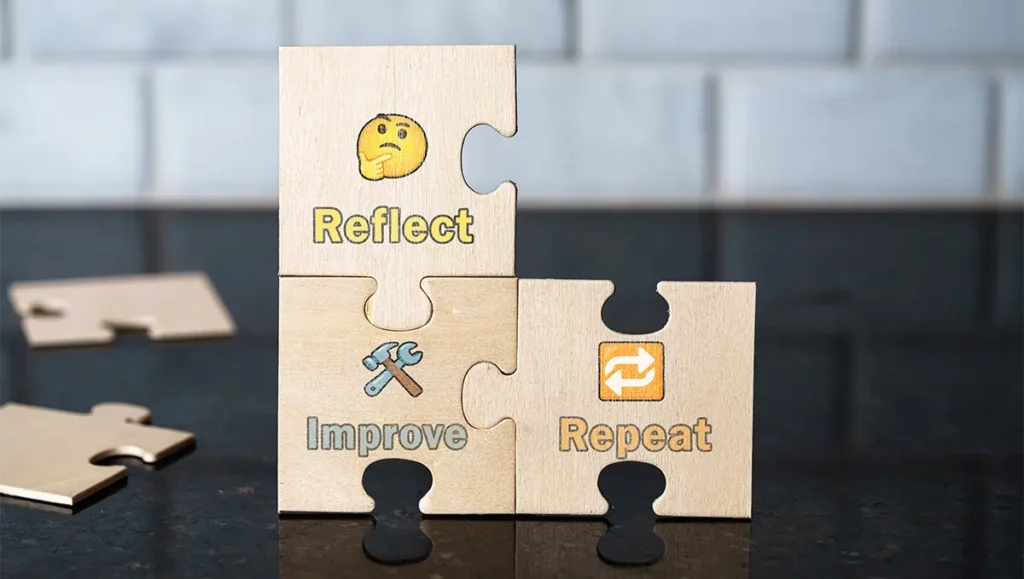
But if homework is going to earn its place in modern education, it needs to evolve. Away from passive review. Towards active rehearsal.
Towards tasks that feel real. Decisions that carry weight. Conversations that require judgement, not recall.
The question is no longer whether students should practise real-world skills outside the classroom.
It’s how we make that practice accessible, scalable, and meaningful.
That’s the question the next part of this series will explore.
Because the future of homework isn’t about doing more work.
It’s about doing the right kind.
Next:
Part 2 proposes an update to homework that gives students the chance to consolidate skills by interacting with AI whilst keeping teachers in the centre of the process.
