




AI role-play for trainers and academies

People don't learn to speak a language or become a master of negotiation from a reading book

It takes practice. People learn by doing. By making mistakes, by trial and error, slowly and painfully. Skill Chamber gives trainers and academies a safer, faster way to get results: AI role-play, personalised to match their methodology.

Supported by

What is Skill Chamber?

Not another LMS. Not a standalone AI tutor. A place to practise

You already have the content. The lessons, the materials, the course. What your learners are missing is somewhere to use it, to speak, to respond, to get it wrong and try again, before they have to get it right in the real world.

That is what Skill Chamber is for. Trainers turn what they teach into guided role-play. Learners step in, practise the conversations that matter to them, and get feedback in the moment. You stay in control of all of it.

Two layers of personalisation

Every trainer teaches differently. Skill Chamber lets trainers shape how the AI behaves and how it evaluates, so the practice reflects their methodology, not ours.

Every learner is different too. The AI adapts to each student's level and builds scenarios around what's relevant to them, so the practice feels personal, and worth coming back to.

Teacher using Skill Chamber

Teachers and trainers can quickly and easily create AI powered role-play exercises that build confidence in:

  • Speaking and listening fluency
  • Persuasion and negotiation
  • Difficult conversations with stakeholders
  • Confidence under pressure

We believe AI should help people build skills, not bypass them.

Where it fits

Built for any context where practice turns knowledge into capability

One-to-one teaching and coaching time is scarce. In language learning, critical oracy, vocational education and professional communication, progress does not just depend on completing the course. Learners need guided practice to turn understanding into confidence and real-world proficiency. Skill Chamber helps educators and trainers amplify their teaching by integrating conversational AI into the educative process.

Language learning icon

Language learning

Extend speaking, listening, reading and writing practice beyond limited class time. Learners use the language more often, in lower-pressure settings, and with more confidence.

Professional communication icon

Professional communication

Create realistic practice for leadership, listening, empathy, negotiation and difficult conversations. It helps turn course theory into capability people can actually use.

Critical oracy icon

Critical oracy

Give students more chances to explain, interpret, justify and think aloud across the curriculum. Structured speaking tasks help turn subject knowledge into clearer reasoning.

Vocational training icon

Vocational training

Help learners apply knowledge in context: explain a process, handle a scenario, make a judgement, or communicate clearly under pressure.

Language teaching lancoach.com → Soft skills Coming soon Critical oracy Coming soon

Why practice matters

Content scales. Practice does not

One-to-one time is scarce. Practice is what turns understanding into real-world ability.

There has never been more content. Lessons, videos, courses, AI summaries of it all. Content is cheaper and faster to produce than ever. What hasn't scaled is the guided practice that turns knowledge into skill: someone to speak to, someone to push back, someone to give feedback in the moment.

That is why so many learners finish the course but hesitate the moment they have to speak, persuade or decide for real. The skills gap is real. Skill Chamber is built to close that gap: to make guided practice easier to set up, easier to complete, and more effective to learn from.

Practice on demand

They say practice makes perfect, but practice makes permanent. Every time learners practise, personalised feedback helps them learn as they go.

Engaging role-play

Challenging conversations get learners thinking on the spot. They keep communicating, instead of passively reviewing their notes.

Audible progress

Turn practice sessions into evidence teachers and trainers can see, hear and review. A feedback loop that helps them build skills.

Making Learning Stick

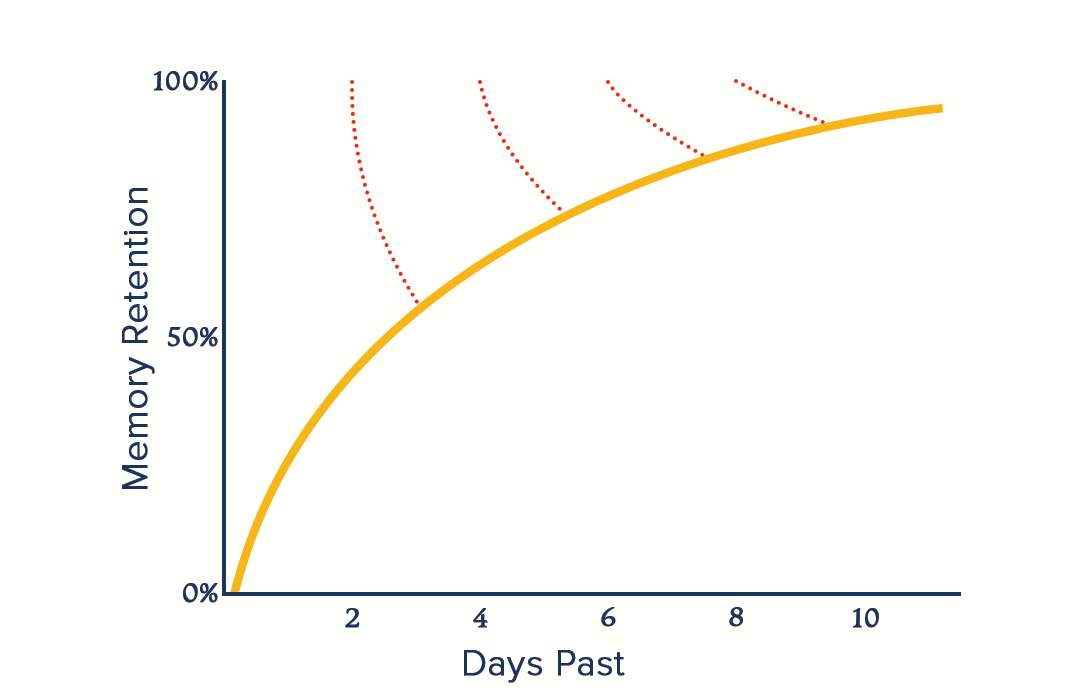
Active practice reinforces memory retention

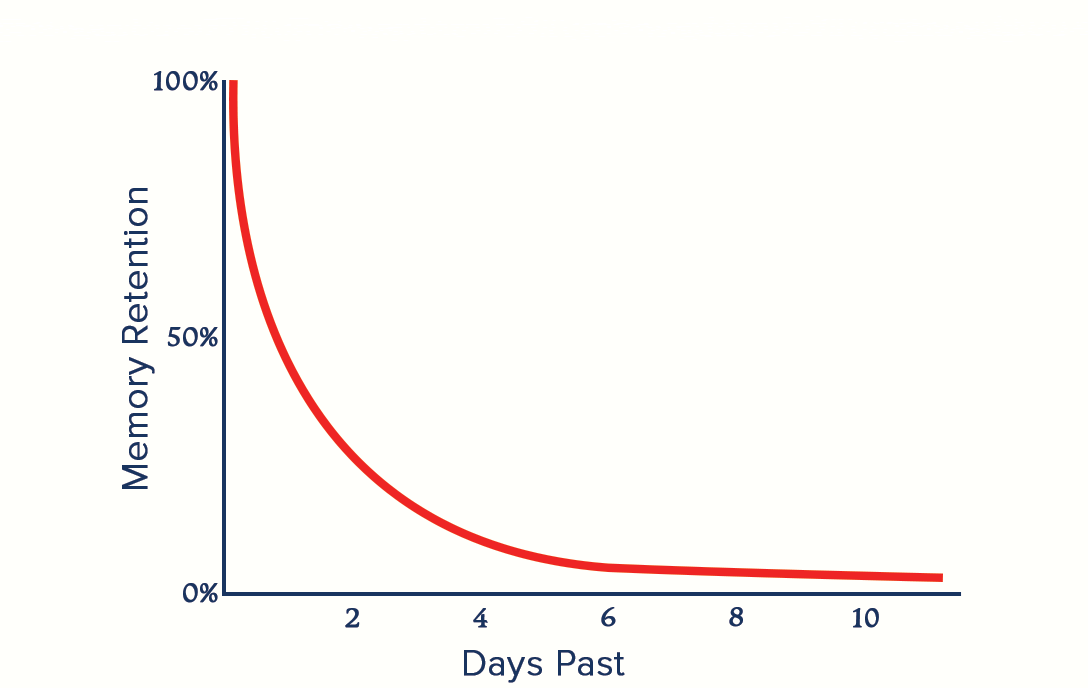
Drag the handle how active practice affects memory retention. The first time you learn something you forget 50% within an hour and 90% after 6 days. When you actively use the grammar, the vocab, the method it begins to stick. Just 20 mins of practice per day is enough to build fluency and skill. Simply put: use it or lose it.

Active practice retention chart
The forgetting curve chart
Forgetting curve Active practice

How it works

Skill Chamber fits into the learning cycle in two simple ways

Skill Chamber can be used in two main ways:

  • After a class, lesson or one-to-one coaching session

or

  • Inside the digital course flow learners already use

It works like this.

01

Teachers set the goal

Our AI assistant helps teachers turn what they are teaching into a role-play, setting the learning objectives and shaping the exercise around them.

02

Learners personalise it

Before they begin, learners choose what they want to talk about, so the scenario feels relevant to them and closer to real life.

03

Students practise with AI

Students step into a conversation where the AI plays a role and a storyline. They learn through the interaction and get feedback at the end.

04

Teachers review progress

Teachers review performance at an individual and group level, seeing where students struggle so they can close the gaps in the next class.

Foundations

AI role-play designed for education, without compromising privacy

If you've got this far, you may have some questions in mind. We answer some of them in this section. If anything's left unresolved, don't hesitate to reach out and ask us.

Data Privacy

When Skill Chamber develops an app for you it operates in an isolated environment. Your scenarios, your learners, your evaluations live in there.

No AI training

Learner conversations power the AI's responses inside your sessions. They are not used to train our systems, or the foundation models behind them.

Data processing

Under GDPR a Data Processing Agreement governs the relationship between Skill Chamber SL and our clients. See terms of service

Testimonial

In an early stage pilot with The Spanish Program we validated the workflow, improved the UX for students and came to understand better the real needs of teachers and students.

Fernando Pérez Cos

Fernando Pérez Cos

Co-author of ¡Ponte al Día!

(A-level Spanish textbook)

thespanishprogram.com
"I hold a government contract to prepare future language teachers, and before they can train, I must confirm they are proficient in a second language. I suspected some students were using AI to produce written work far above their real level, but I had no way to prove it. Skill Chamber changed that. I made conversational practice obligatory for every student, and I could see exactly how much time and effort each of them was putting in. It lifted a great weight from my mind to assess my students on their own ability, knowing the work was really their own."
  • 31 mins average session time
  • 58 mins longest user session
  • 80% return rate

Pedagogy first

Our AI agents are built around what career teachers know and what learning science confirms. Where the two agree, we build. Where they don't, we go back to the drawing board.

What does that look like in practice? For example: when the AI gives feedback, it uses the sandwich, one thing the learner did well, one mistake worth working on, one correction they can act on. When the moment allows, the AI takes a Socratic line, pointing to where something went wrong and giving the learner the chance to correct it themselves.

Teachers have worked this way for decades. We've built the AI to do the same, for every learner.

The people behind Skill Chamber

Built by educators, technologists, and product builders

Three founders. Different disciplines. One shared belief: AI should help people build skills, not bypass them.

Ernesto Buttó

Ernesto Buttó

Product architecture and platform development

A technologist, product builder, and AI specialist with more than 20 years of experience across CMS, SaaS, language learning, and AI. Co-founder of Catwizard and LingoStand, he has worked as a Software Engineer in environments including Planhat in Sweden, and more recently as an AI Tutor at the EOI, helping businesses apply AI in practice. At Skill Chamber, he leads product architecture and platform development.

Adam Giles

Adam Giles

Market development and growth

An entrepreneur and communicator with a background spanning English teaching, hospitality, and digital communications. He spent more than 11 years building and running hospitality and events businesses before moving into the tech industry, where he has spent the last 6 years making complex products clear and accessible. At Skill Chamber, he shapes the company's vision and go-to-market approach.

Cindy Marin

Cindy Marin

Engineering and frontend product delivery

A software engineer and frontend specialist with more than 15 years of experience building digital products internationally. She co-founded Catwizard and LingoStand, and later worked as a Frontend Software Engineer at Celonis on enterprise-scale solutions. At Skill Chamber, she leads engineering and frontend product delivery.

Tell us what your learners need to practise

If you run a school, academy or training programme and want to explore where Skill Chamber fits, tell us a little about your context. We will point you to the most relevant use case and show you how the platform could support it.